


TL;DR:
- Contemporary wall art is created in the present day and reflects current cultural movements, social themes, and technology, distinguishing it from historical modern art. Selecting appropriately sized pieces that are about 50-60% of furniture width and hung at eye level enhances your home’s aesthetic and personal expression. Building emotional connections with art beats following trends, as intentional choices transform spaces with lasting meaning.
Contemporary wall art is defined as artwork created in the present day that reflects current cultural movements, social themes, and evolving technologies. Unlike historical art movements with fixed endpoints, contemporary art is a living category. It shifts as the world shifts. For anyone decorating a home or exploring art for personal enrichment, understanding what separates contemporary work from other styles is the first step toward choosing pieces that genuinely resonate. Artify works with independent artists to make this kind of art accessible, personal, and built to last in your space.
What is contemporary wall art and how does it differ from modern art?
Contemporary art is created recently and reflects current trends, including digital formats and mixed media. This is where most people get tripped up: “modern” and “contemporary” are not interchangeable. Modern art refers to a specific historical period running roughly from the 1860s through the 1970s, covering movements like Impressionism, Cubism, and Abstract Expressionism. Contemporary art starts where that history ends and continues into the present. That distinction matters when you are choosing pieces for your home, because the two categories carry very different visual vocabularies.
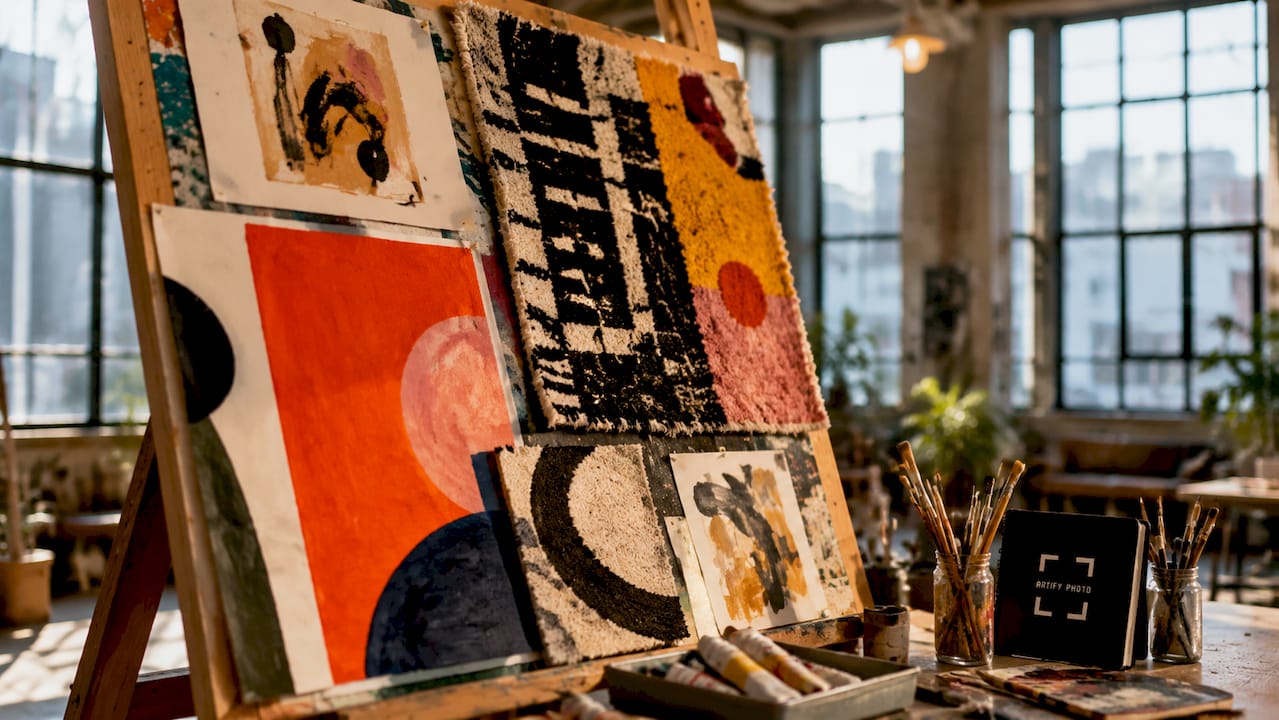
Contemporary wall art also has a broader scope than any previous movement. It includes oil paintings, digital prints, photography, textile-based works, and mixed media pieces that combine photography with hand-painted elements. Social commentary, identity, technology, and environmental themes appear regularly. Abstract and minimalist styles exist within contemporary art, but they are not the whole picture. A photorealistic portrait printed on aluminum and a gestural abstract canvas can both qualify as contemporary, which is part of what makes the category so adaptable to different interiors.
The table below clarifies the key distinctions between the most commonly confused art categories:
| Style | Time period | Defining characteristics |
|---|---|---|
| Modern art | Roughly 1860s to 1970s | Formal experimentation, abstraction, rejection of tradition |
| Contemporary art | 1970s to present | Reflects current culture, technology, and social themes |
| Abstract art | Spans both periods | Non-representational, emotion-driven, shape and color focused |
| Minimalist art | Primarily 1960s onward | Reduction to essential forms, neutral palettes, clean lines |
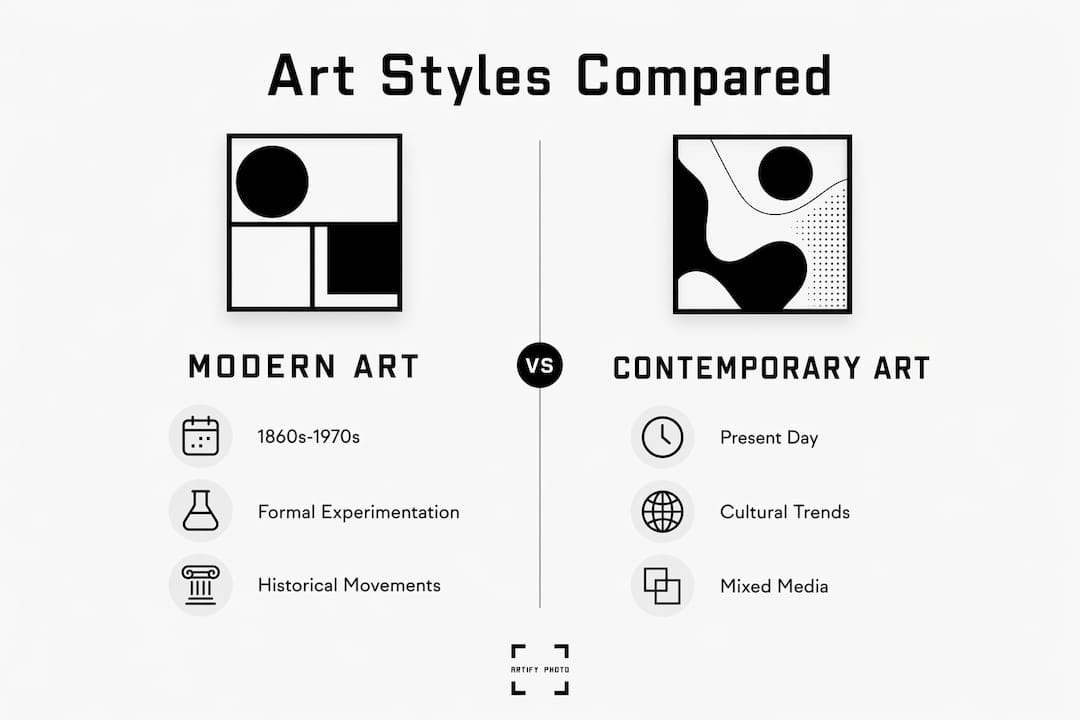
The practical takeaway: if you want art that speaks to where culture is right now, contemporary is the category. If you want the visual language of a specific historical movement, you are shopping for something more specific.
What are the main types of contemporary wall art?
The types of wall art available in the contemporary category span a wider range of mediums than most buyers realize. Each format carries its own visual weight and works better in certain rooms and lighting conditions.
- Original paintings. Acrylic and oil paintings remain the most emotionally immediate format. Brushwork, texture, and scale create a physical presence that reproductions cannot fully replicate. Large abstract canvases work especially well as anchor pieces above sofas or in open-plan living areas.
- Photography prints. Fine art photography printed on archival paper, canvas, or metal delivers precision and mood simultaneously. Black-and-white photography adds drama and timelessness; color photography can anchor a room’s palette.
- Digital prints. Artists working in Procreate, Adobe Illustrator, or generative AI tools produce work that is indistinguishable from hand-drawn illustration at a fraction of the cost. This format has expanded access to contemporary art significantly.
- Mixed media works. These combine photography, painting, collage, and found materials on a single surface. They tend to be conversation starters because viewers keep discovering new layers.
- Metal prints. These provide vibrant colors, durability, and a sleek aesthetic that suits modern and industrial interiors. They are washable, slim, and produce color depth that paper prints cannot match.
Pro Tip: Before committing to a format, consider your room’s lighting. Metal prints reflect light and look best in spaces with controlled, directional lighting. Matte canvas works better in rooms with large windows and variable natural light.
Contemporary art styles within these formats range from bold geometric abstraction to soft organic figurative work. Color palettes shift by trend: earthy terracottas and warm neutrals dominated the early 2020s, while cooler sage greens and deep cobalt blues have gained ground more recently. Neither is more “correct.” The right palette is the one that works with your existing room colors and the emotional tone you want to set.
How to select and size contemporary wall art for your home
Scale is the most commonly mishandled element in home art placement. Art above furniture should span 50 to 60% of the furniture’s width to anchor the space effectively. For a 220cm sofa, that means artwork between 110cm and 155cm wide. Pieces that are too small float awkwardly above furniture and make the room feel unresolved. This single rule eliminates the most common decorating mistake buyers make.
Height matters just as much as width. The center of artwork should sit at 145 to 150cm from the floor, which places it at natural eye level for most adults. Hanging art too high is the second most common mistake, and it disrupts the gallery-quality feel that makes a room look intentional. When in doubt, go lower than your instinct suggests.
Follow these steps when selecting and placing art in your home:
- Measure before you shop. Note the width of the furniture or wall section the art will sit above. Calculate 50 to 60% of that measurement to define your target size range.
- Pull your room’s color palette. Identify two or three dominant colors in your furniture, rugs, and walls. Your art does not need to match exactly, but it should share at least one color relationship with the room.
- Define the emotional tone you want. A calm bedroom calls for different work than a stimulating home office. Prioritize how art makes you feel and whether it supports the mood you want in that specific room.
- Test before you commit. Print a scaled paper template of your target size and tape it to the wall. Live with it for a day or two before ordering. This step prevents expensive sizing mistakes.
- Budget for framing. Custom framing can significantly increase the total cost of an artwork purchase beyond the sticker price. Factor framing into your budget from the start, not as an afterthought.
For gallery walls, effective arrangements require one or two dominant anchor pieces covering 50 to 60% of the furniture width below. Without that hierarchy, a gallery wall reads as cluttered rather than curated. Start with your largest piece, center it, then build outward with smaller works.
Pro Tip: Use Artify’s 3D room preview tool to visualize how a piece will look in your actual space before purchasing. It removes the guesswork from scale and color decisions entirely.
What are the real benefits of contemporary wall art in your home?
The benefits of modern wall art go beyond decoration. Art defines the energy of a space and reveals the personality and interests of the people who live there. A well-chosen piece does more work than any piece of furniture in the room.
Here is what contemporary wall art actually delivers:
- Personalization at scale. A single large contemporary print transforms a neutral room into a space that feels distinctly yours. No other decorating element achieves that shift as quickly or as affordably.
- Cultural relevance. Contemporary art reflects the world you live in now. It connects your home to current conversations in art, design, and culture rather than referencing a historical period you did not experience.
- Flexibility. Unlike built-in architectural features, art can move, change, and evolve with your taste. Swapping a piece is far cheaper than repainting a room or replacing furniture.
- Conversation and engagement. Pieces that carry ambiguity or narrative give guests something to respond to. Art that prompts a question or a reaction creates connection in a way that purely decorative objects rarely do.
- Accessible price points. Digital prints and on-demand photography make gallery-quality contemporary art available at every budget level. Even budget-friendly art appears premium when scale and placement are deliberate.
“There is no single right way to choose art. Whether you want cozy, dramatic, or soothing vibes, select art that enhances that mood.” — The Spruce
The role of art in personalizing your home is not a soft benefit. It is the primary reason a room feels lived-in and intentional rather than staged. Contemporary art, because it reflects present-day culture and identity, does this more directly than work from any other period.
Key takeaways
Contemporary wall art works best when chosen for emotional resonance, sized deliberately to anchor furniture, and placed at eye level to create a gallery-quality result.
| Point | Details |
|---|---|
| Definition clarity | Contemporary art is present-day work; modern art refers to a historical movement ending around the 1970s. |
| Sizing rule | Art should span 50 to 60% of the furniture width below it to anchor the space effectively. |
| Placement standard | Center artwork at 145 to 150cm from the floor for optimal eye-level viewing. |
| Format variety | Paintings, photography, digital prints, mixed media, and metal prints all qualify as contemporary wall art. |
| Emotional priority | Choose art based on how it makes you feel and whether it supports the mood you want in the room. |
The relationship you build with a piece matters more than the trend it follows
At Artify, the most consistent thing we hear from buyers who are happy years later is that they chose work they could not stop thinking about, not work that matched the sofa. Trends in contemporary art move fast. Earthy neutrals, maximalist color, digital abstraction, and quiet minimalism have all cycled through in the past five years. If you chase the trend, you will be replacing art every few years.
Art chosen with intention becomes part of the architecture of your life, revealing new layers and personal meaning over time. The pieces that hold up are the ones that had something to say to you on day one and still have something to say on day five hundred. That is not a romantic idea. It is a practical filter for making a good purchase.
My honest advice: if you are standing in front of a piece and thinking “this would look good in the living room,” keep looking. If you are thinking “I need to own this,” that is the one. Scale and placement can be solved. Emotional connection cannot be retrofitted.
— Artify
Bring your walls to life with Artify
Artify makes it straightforward to find contemporary wall art that fits your space, your style, and your budget.
Browse Artify’s pre-made collections to find curated contemporary pieces organized by mood, color, and style. Every collection is built to simplify the selection process without narrowing your options. For buyers who want a polished finish, Artify’s framing options are designed to complement contemporary work across every format, from fine art prints to metal. Each frame is selected to enhance rather than compete with the artwork itself. Whether you are starting your first collection or adding a statement piece to a room you love, Artify’s catalog covers the full range.
FAQ
What is contemporary wall art, exactly?
Contemporary wall art is artwork created in the present day that reflects current cultural, social, and technological themes. It differs from modern art, which refers to a specific historical movement running roughly from the 1860s to the 1970s.
How do I choose the right size wall art for my room?
Art above furniture should span 50 to 60% of the furniture’s width, and the center of the piece should hang at 145 to 150cm from the floor. These two measurements eliminate the most common sizing and placement mistakes.
What are the main types of contemporary wall art?
The main types include original paintings, fine art photography, digital prints, mixed media works, and metal prints. Each format suits different room conditions, lighting setups, and budget levels.
Where can I buy contemporary wall art online?
Artify offers a curated selection of contemporary art pieces across styles, formats, and price points, including works by independent artists and custom print options. Platforms focused on independent artists generally offer more distinctive work than mass-market retailers.
Do I need to match wall art to my existing room colors?
Art does not need to match your room exactly, but it should share at least one color relationship with your existing palette. More importantly, prioritize how the piece makes you feel and whether it supports the emotional tone you want in that space.