


TL;DR:
- Wall art encompasses diverse styles, materials, and formats that uniquely enhance a home’s aesthetic and texture. From original paintings to layered mixed media, each type suits specific decor styles, room functions, and budgets, emphasizing thoughtful material and placement choices. Incorporating varied art types from the beginning creates more personalized, dynamic spaces that reflect individual taste and visual rhythm.
Types of wall art refer to the various styles, materials, and formats used to decorate walls, each adding distinct visual and textural character to a living space. From oil paintings with 40,000-year roots to modern metal prints with luminous, reflective finishes, the range available today gives every homeowner a genuine opportunity to express personality through decor. Choosing the right type means understanding how style, material, and room function intersect. This guide covers every major category so you can make a confident, informed decision.
1. Types of wall art: paintings and original works
Original paintings are the oldest and most personal form of wall art. Oil, acrylic, and watercolor works carry the hand of the artist in every brushstroke, making each piece one of a kind. That uniqueness commands a higher price, but it also means no two homes will ever look identical. For traditional interiors with crown molding, hardwood floors, and warm color palettes, an original oil painting anchors the room with authority.
Canvas prints sit just below originals in terms of prestige but deliver comparable visual impact. Canvas texture holds color dynamically and works equally well for reproductions of famous works or custom photo art. Gallery-wrapped canvas eliminates the need for a frame, which suits minimalist and contemporary spaces well.
- Original paintings: Unique, high investment, best for traditional or eclectic rooms
- Acrylic paintings: Vivid color, faster drying, suits modern and abstract styles
- Watercolor works: Soft, translucent quality, ideal for bedrooms and reading nooks
- Canvas prints: Accessible price point, frameless option, versatile across styles
Pro Tip: When framing original works on paper or canvas, use UV-protective glass to prevent fading from natural light. This single step extends the life of a piece by decades.
2. Photography prints and posters
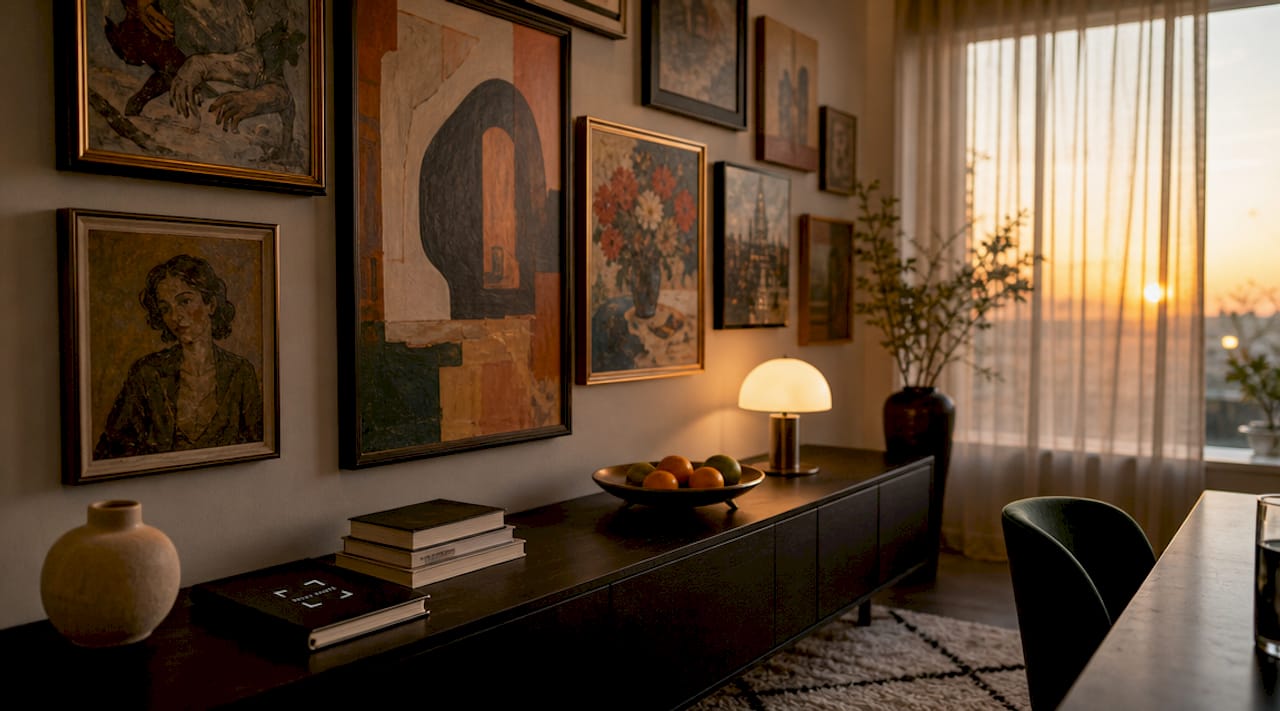
Photography prints bring realism, mood, and narrative to a wall in a way that painted art rarely matches. A large-format black-and-white cityscape above a sofa creates instant drama. A soft botanical photograph in a bedroom adds calm without clutter. The format ranges from fine art prints on archival paper to metal prints with exceptional color depth that seem to glow from within.
Posters occupy the most affordable end of the spectrum. They work surprisingly well in casual spaces like home offices, studios, and teen bedrooms. The key is framing. A poster in a clean black frame with a white mat instantly reads as intentional decor rather than an afterthought.
Photography and poster art also offer the widest range of subject matter. Landscapes, portraits, abstract compositions, pop culture references, and architectural photography all fall under this category. For personalized spaces, custom photo prints from platforms like Artify let you transform your own images into gallery-quality wall art.
3. Three-dimensional wall art: sculptures and metal work
Three-dimensional wall art adds depth that flat prints simply cannot replicate. Metal wall sculptures, carved wood panels, and cast resin pieces create shadow and movement as light shifts throughout the day. This makes them particularly effective in rooms with strong directional lighting or large, bare walls that need visual weight without additional furniture.
Metal wall art suits bold, modern settings. Metal prints produce luminous, durable pieces with reflective qualities that shift with ambient light, making them a strong choice for living rooms and entryways. Wood carvings and panels bring organic warmth, which works well in farmhouse, Scandinavian, and rustic interiors.
- Metal sculptures: Durable, reflective, ideal for contemporary and industrial spaces
- Wood panels: Warm, textured, suits rustic and natural decor styles
- Cast resin art: Lightweight, detailed, works for both modern and decorative traditional rooms
- Geometric metal art: Graphic and bold, strong statement piece for minimal walls
Pro Tip: Mount three-dimensional wall art with picture rail hooks or French cleats rather than standard nails. This distributes weight evenly and makes repositioning easy without new holes.
4. Tapestries, textile art, and fiber work
Textile wall art is one of the most underused categories in home decoration, and that is a genuine missed opportunity. Tapestries add warmth, improve room acoustics, and introduce tactile contrast that no print or painting can offer. In rooms with hard floors, bare walls, and reflective surfaces, a large woven tapestry absorbs sound and softens the entire atmosphere.
Fiber art and macramé have moved well beyond craft-fair aesthetics. Contemporary fiber artists produce large-scale works that hang as confidently as any gallery painting. These pieces work especially well in bedrooms, meditation spaces, and living rooms where warmth and texture are priorities.
Textile art also travels well between styles. A Moroccan-inspired tapestry works in a bohemian room. A neutral linen weave suits a Scandinavian or coastal interior. For eclectic living room decor, mixing a textile piece with framed photography creates layered visual interest without chaos.
5. Mixed media and layered wall art
Mixed media art combines two or more materials or techniques in a single piece. Think resin poured over photography, fabric collaged with paint, or metal leaf applied to a printed canvas. The result is visual complexity that rewards close inspection and holds attention longer than a single-medium work.
This category suits collectors and decorators who want something genuinely unique. No two mixed media pieces are identical, even from the same artist. They tend to work best as statement pieces rather than in gallery wall arrangements, where their complexity can compete with neighboring works.
Layered shadow box art is a related format worth considering. Three-dimensional objects mounted inside a deep frame create a curated, museum-quality display. Pressed botanicals, vintage maps, and found objects all translate well into this format.
6. How wall art materials affect style and durability
Material choice is the single most practical decision in wall art selection. Metal and acrylic prints offer a modern, sleek finish ideal for contemporary spaces, while wood panels and textiles introduce organic warmth. Beyond aesthetics, material determines where a piece can safely live in your home.
Metal or treated canvas performs best in humid or high-traffic areas like bathrooms, kitchens, and hallways. Delicate paper prints fade and buckle in moisture. Acrylic glass looks vibrant but attracts static and scratches easily, so it suits low-traffic display areas rather than busy corridors.
| Material | Durability | Best style fit | Maintenance |
|---|---|---|---|
| Metal | High | Contemporary, industrial | Wipe clean, scratch-resistant coating recommended |
| Canvas | Medium | Modern, traditional, eclectic | Avoid humidity, dust regularly |
| Acrylic glass | Medium | Minimalist, modern | Anti-static cloth only, avoid abrasives |
| Wood panel | Medium | Rustic, Scandinavian, organic | Seal against moisture, avoid direct sunlight |
| Paper print | Low | Casual, poster, budget decor | Frame with UV glass, keep dry |
| Textile | Medium-high | Bohemian, eclectic, soft modern | Spot clean or gentle hand wash |
Pro Tip: In bathrooms or kitchens, choose metal prints or sealed canvas over paper-based art. The investment is modest and the difference in longevity is significant.
7. Choosing wall art to match your home decor style
Matching art to your interior style is less about rigid rules and more about visual logic. Traditional homes with ornate furniture and warm tones suit oil paintings, gilded frames, and classical portraiture. Traditional wall art carries cultural heritage and narrative depth that reinforces the formal character of these spaces. Contemporary and minimalist rooms benefit from clean-lined photography, abstract canvas prints, and geometric metal sculptures.
For eclectic interiors, the goal is intentional contrast rather than random mixing. Pair a large textile piece with two smaller framed photographs. Combine a metal sculpture with a soft watercolor print. The key is maintaining a consistent color story across different art types so the wall reads as curated rather than cluttered.
Size and placement matter as much as style. A piece that is too small for a wall reads as an afterthought. The standard rule is that art should cover 60 to 75 percent of the available wall width above a sofa or bed. Using paper templates to mock arrangements before hanging prevents costly mistakes and helps you visualize proportion accurately.
- Traditional rooms: Oil paintings, gilded frames, classical prints, tapestries
- Modern and minimalist rooms: Canvas prints, metal art, abstract photography
- Bohemian and eclectic rooms: Textiles, mixed media, layered gallery walls
- Scandinavian and organic rooms: Wood panels, neutral fiber art, botanical photography
Pro Tip: Before committing to a gallery wall arrangement, cut paper templates to the exact size of each frame and tape them to the wall. Adjust until the layout feels balanced, then hang. This approach, recommended by professional decorators, saves walls and frustration.
8. Budget-friendly wall art options with real visual impact
High-impact wall decor does not require a high budget. Posters in quality frames, canvas prints, and photography reproductions all deliver strong visual results at accessible price points. The frame is often the deciding factor. A well-chosen frame transforms an inexpensive print into something that looks deliberate and polished.
For those willing to invest, original paintings and metal wall art offer durability and uniqueness that justify the cost over time. Metal prints in particular hold color and finish for decades without fading, making them a genuinely cost-effective choice when measured against replacement costs for cheaper alternatives.
Rotating affordable art seasonally is a practical strategy for keeping spaces feeling fresh. Swap poster prints between rooms, change frames to update the look, or add a new textile piece to shift the mood without redecorating entirely.
- Under $50: Posters, digital art prints, small photography prints
- $50 to $200: Canvas prints, framed photography, small textile pieces
- $200 to $500: Metal prints, original small-format paintings, quality tapestries
- $500 and above: Large original paintings, custom mixed media, statement metal sculptures
Key takeaways
The most effective approach to choosing types of wall art is matching material, style, and room function together rather than selecting based on trend or price alone.
| Point | Details |
|---|---|
| Material determines placement | Use metal or sealed canvas in humid areas; reserve paper prints for dry, low-traffic spaces. |
| Style alignment matters | Match traditional art to classic interiors and abstract or metal work to modern rooms for visual coherence. |
| Dimension adds depth | Three-dimensional and textile art create shadow and texture that flat prints cannot replicate. |
| Budget does not limit impact | A well-framed poster or canvas print delivers strong visual results at any price point. |
| Plan before you hang | Paper templates and painter’s tape prevent errors and improve proportion in gallery wall arrangements. |
What I’ve learned from curating walls that actually feel like home
The most common mistake I see is treating wall art as the last step in decorating, something chosen after the furniture, rugs, and lighting are already in place. Art chosen that way tends to feel like a gap-filler rather than a genuine part of the room. The spaces that feel most alive are the ones where art was part of the conversation from the beginning.
Choosing art that resonates personally over art that simply matches a color palette creates rooms people remember. A textile piece your grandmother wove, a photograph from a trip that changed how you see the world, a print by an artist whose work genuinely moves you. These choices create rooms with a point of view. Trend-driven art, no matter how well executed, tends to feel anonymous within a few years.
Mixing types is where the real interest lives. A metal sculpture next to a soft watercolor print. A large tapestry behind a cluster of small framed photographs. The contrast between materials and formats creates visual rhythm that a single-medium wall cannot achieve. Start with one strong anchor piece, then build around it with complementary types rather than matching sets.
— Artify
Find your next piece at Artify
Artify offers a wide selection of pre-made collections spanning photography, abstract art, pop culture prints, and landmark-inspired works, all produced to gallery quality. Whether you want a bold metal print for a modern living room or a soft canvas piece for a bedroom, the catalog covers every major style and material discussed in this guide. You can also upload your own photographs and transform them into custom canvas, metal, or framed prints through the creating your art tool. Browse the full pre-made artworks gallery to find pieces that fit your space, style, and budget without the guesswork.
FAQ
What are the main types of wall art?
The main types of wall art include paintings, photography prints, posters, canvas prints, metal prints, tapestries, fiber art, wall sculptures, and mixed media pieces. Each type differs in material, visual impact, and suitability for different room styles and conditions.
What is traditional wall art?
Traditional wall art is defined by techniques like oil painting, fresco, and classical portraiture with roots stretching back thousands of years. It provides cultural heritage and narrative depth, making it a strong fit for formal or historically styled interiors.
Which wall art material is best for humid rooms?
Metal prints and sealed canvas are the best choices for humid spaces like bathrooms and kitchens. Paper prints and untreated wood panels fade, buckle, or warp when exposed to consistent moisture.
How do I choose the right size of wall art?
Art should cover 60 to 75 percent of the available wall width above a sofa or bed. Use paper templates cut to the exact frame dimensions and tape them to the wall before hanging to confirm proportion and placement.
Are canvas prints better than framed prints?
Canvas prints offer a frameless, gallery-wrapped look that suits modern and minimalist interiors, while framed art adds structure and formality that works well in traditional or eclectic rooms. The better choice depends on your interior style and the visual weight you want the piece to carry.