


TL;DR:
- Modern wall art in 2026 features oversized statement pieces, textured finishes, and warm minimalism that shape a space’s mood. It emphasizes intentional scale, placement, and personal meaning over decoration, creating a curated, lasting impact. Selecting art based on emotional resonance and proper scaling transforms interiors into calm, personal environments.
Modern wall art is defined by intentional, oversized statement pieces that combine texture, warm minimalism, and personal meaning to shape the mood and character of a room. Unlike decorative afterthoughts, contemporary wall decor functions as the visual anchor of a space. It communicates identity, directs the eye, and sets the emotional tone before a single word is spoken. Defining modern wall art in 2026 means understanding that art is no longer just what hangs on a wall. It is how you think and what interests you, expressed at scale, with purpose.
What are the defining characteristics of modern wall art in 2026?
Modern wall art in 2026 is built around five core traits that separate it from generic decoration. These traits reflect a broader shift in interior design toward spaces that feel considered, calm, and deeply personal.
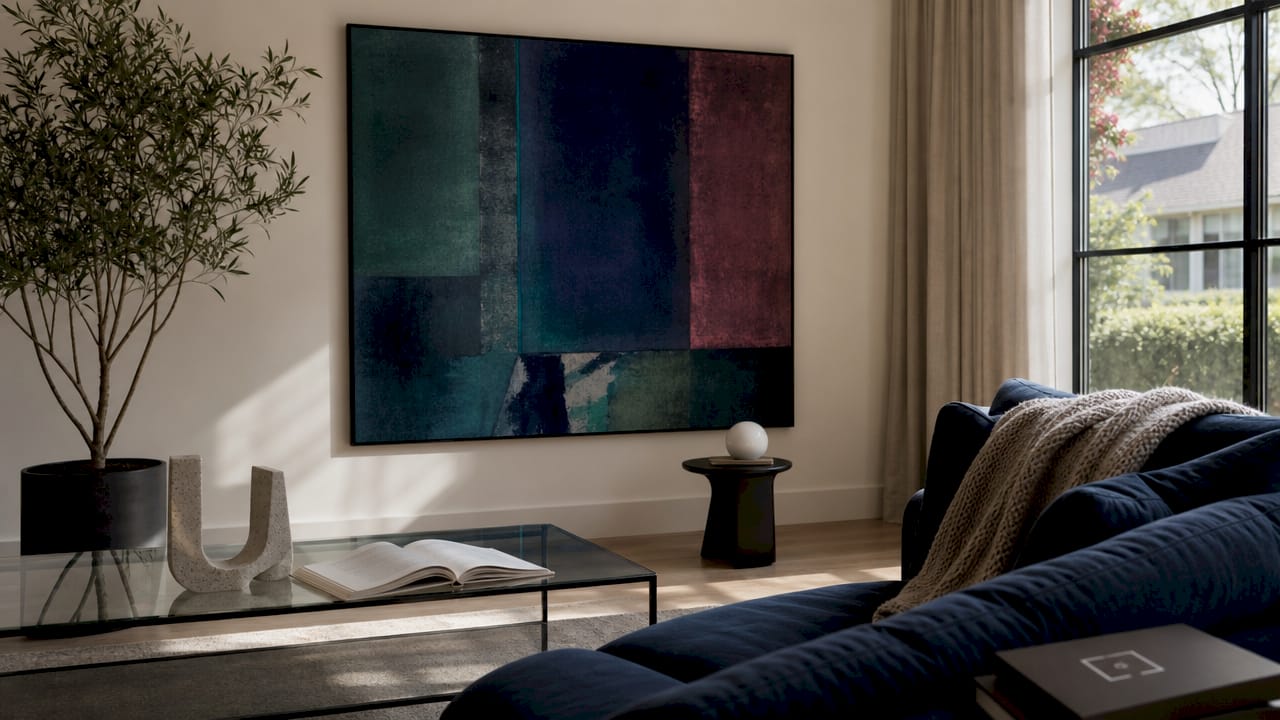
- Oversized statement pieces. Intentional oversized art anchors rooms and reduces visual clutter by replacing collections of small, competing frames with a single commanding focal point. One well-chosen large piece does more for a room than six smaller ones ever could.
- Texture and dimensional finishes. Tactile finishes like limewash or plaster have surpassed flat prints as the primary aesthetic in modern interiors. Texture adds depth and a physical presence that photographs and reproductions simply cannot replicate.
- Warm minimalism. The cold, stark black-and-white minimalism of the early 2010s is finished. Warmer, calmer styling with soft neutrals, terracotta, and muted sage now defines the modern palette. This shift makes rooms feel livable rather than clinical.
- Organic shapes and nature-inspired themes. Curved forms, botanical motifs, and abstract landscapes replace rigid geometry as the dominant visual language. These elements introduce a sense of ease and natural rhythm into structured interiors.
- Expressive personality within simplicity. Modern wall art does not mean empty walls. It means choosing fewer pieces with greater intention, each one carrying enough visual weight to hold attention without overwhelming the space.
Pro Tip: When selecting a statement piece, hold a sheet of kraft paper cut to the intended artwork size against the wall before purchasing. This simple test reveals whether the scale feels right before you commit.
The balance between restraint and expression is what makes defining contemporary art so compelling in 2026. The goal is not decoration. It is deliberate visual storytelling.
How to choose and scale modern wall art for your space
Choosing the right art is half the decision. Placing it correctly is the other half. Most rooms with art that feels “off” are not suffering from bad taste. They are suffering from poor scaling or incorrect placement.
- Apply the two-thirds rule. Artwork should span about two-thirds the width of the furniture beneath it or the wall it occupies. A sofa that is 84 inches wide calls for art between 55 and 60 inches wide. This proportion creates visual balance without making the piece feel cramped or lost.
- Hang at eye level. Gallery standards center artwork at 57 to 59 inches from the floor. This height works in nearly every residential room and keeps art connected to the human scale of the space rather than floating near the ceiling.
- Match art to room function. A bedroom calls for softer, more intimate pieces. A living room can carry bolder, more graphic work. A home office benefits from art that stimulates without distracting. The function of the room should guide the emotional register of the art.
- Single large piece versus gallery wall. A single oversized canvas creates immediate impact and suits warm minimalist interiors. A gallery wall works when you want to tell a layered story, but consistent gaps and one dominant anchor piece are non-negotiable for it to read as intentional rather than cluttered.
- Avoid the three most common mistakes. Art that is too small for its wall, hung too high for the viewer, or scaled against the wrong reference point (the room rather than the furniture) are the errors that make otherwise well-designed spaces feel unresolved.
| Scenario | Recommended approach |
|---|---|
| Art above a sofa | Width should be 55 to 65% of sofa length, centered above it |
| Single wall without furniture | Use the two-thirds wall width rule, centered at 57 inches |
| Gallery wall | Start with the largest anchor piece, build outward with 2 to 3 inch gaps |
| Bedroom above headboard | Keep bottom edge 6 to 8 inches above the headboard |
Pro Tip: For gallery walls, arrange all frames on the floor first. Photograph the layout from above, then use that image as your guide when transferring the arrangement to the wall.
Knowing how to choose wall art by size and placement removes the guesswork and turns an intimidating decision into a repeatable process.
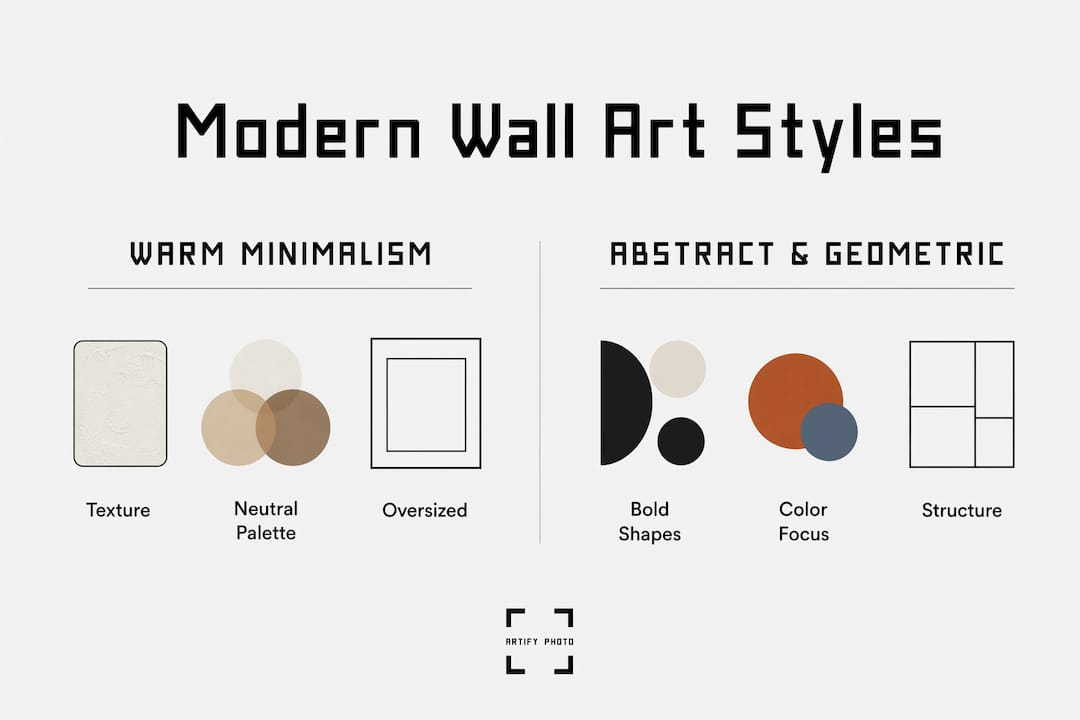
Comparing modern art styles and formats for wall decor
Not all modern wall art styles serve the same purpose. Understanding the differences helps you match format and aesthetic to the specific needs of a room.
Abstract art works in almost any modern interior because it invites interpretation without demanding a specific emotional response. It suits living rooms and open-plan spaces where multiple people with different tastes share the same environment.
Minimalist art uses negative space, limited color, and simple forms to create calm. It is the natural companion to warm minimalism interiors and performs best in bedrooms, bathrooms, and reading spaces where visual quiet is the goal.
Geometric art brings structure and precision. It pairs well with mid-century modern furniture, clean-lined architecture, and spaces that already carry strong horizontal or vertical lines.
Nature-inspired art including botanical prints, landscape photography, and organic abstract forms connects interior spaces to the natural world. This category has grown significantly as warm minimalism has replaced colder design aesthetics.
When it comes to format and material, the choices are equally important:
- Framed prints offer flexibility and a finished, gallery-ready look. They work across all styles and are the most accessible entry point for building a modern collection.
- Canvas prints add warmth and a painterly quality. Unframed canvases suit casual, textured interiors.
- Metal prints deliver a premium contemporary quality with sharp detail and a slight luminosity. They suit industrial, modern, and high-contrast interiors.
- Textured wall panels and sculptural forms add physical dimension to a wall. These are the most direct expression of the texture-forward trend defining 2026 modern decor.
| Style | Best room | Key mood |
|---|---|---|
| Abstract | Living room, open plan | Open, interpretive |
| Minimalist | Bedroom, bathroom | Calm, restful |
| Geometric | Office, mid-century spaces | Structured, precise |
| Nature-inspired | Any room | Grounded, organic |
| Textured panels | Feature walls | Luxurious, dimensional |
Mixing styles is possible and often desirable. The rule is to maintain a consistent color story or framing system so that varied pieces read as a curated collection rather than a random accumulation. You can explore portrait vs. landscape orientation as another layer of decision-making when building a cohesive wall.
How to create a personal and lasting connection with your wall art
The most overlooked dimension of modern wall art selection is longevity. Trends shift. Tastes evolve. The art that stays meaningful is the art that was chosen for personal resonance rather than current popularity.
“Art should continue to inspire after years of daily exposure. The true test is not whether a piece looks good on the day you hang it, but whether it still holds your attention five years later.” — Martha Stewart
This principle reframes the entire selection process. Instead of asking “Is this on trend?” the better question is “Does this reflect something true about how I see the world?” Art that answers yes to the second question almost always survives trend cycles. Art chosen for the first reason rarely does.
Personal meaning does not require expensive or rare pieces. Art holds design power regardless of price when it carries genuine character and intention. A textile brought back from travel, a print by an independent artist whose work genuinely moves you, or a custom piece built around a family photograph can carry more visual and emotional weight than a gallery acquisition chosen for status.
Building a collection over time is more satisfying than furnishing walls all at once. Start with one strong anchor piece in the most important room. Add to it gradually, letting each new piece respond to what is already there. This approach creates a collection that feels layered and lived-in rather than staged.
Pro Tip: Live with a piece for 30 days before deciding it is permanent. Move it to different walls, observe it in different light conditions, and notice whether your attention returns to it naturally. That instinct is your most reliable guide.
Pieces like Family Ties by Artify demonstrate how personal narratives and strong design can coexist in a single work. The most enduring modern wall art collections are built on exactly this combination.
Key takeaways
Modern wall art is defined by oversized, intentional pieces that combine warm minimalism, texture, and personal meaning to anchor and transform interior spaces.
| Point | Details |
|---|---|
| Oversized art anchors rooms | One large statement piece reduces clutter and creates stronger visual impact than multiple small works. |
| Texture defines 2026 trends | Dimensional finishes like limewash and metal prints have replaced flat prints as the dominant modern aesthetic. |
| Scale with the two-thirds rule | Artwork should span roughly two-thirds the width of the furniture or wall it occupies for visual balance. |
| Hang at 57 inches center | Gallery standard eye-level placement keeps art connected to human scale in any residential room. |
| Personal resonance outlasts trends | Art chosen for lasting meaning rather than current popularity remains satisfying over years of daily exposure. |
What I’ve learned from watching art transform a room
At Artify, we see hundreds of rooms before and after art is added. The transformation is rarely subtle. A bare wall above a sofa reads as unfinished, no matter how well the rest of the room is designed. Add one oversized piece at the right scale, and the entire space resolves.
What surprises most people is how much the wrong art can hurt a room. A piece that is too small, too busy, or emotionally disconnected from the space creates a kind of visual static. The room feels like it is trying to say two things at once. Intentionality is not just an aesthetic preference. It is the difference between a room that feels designed and one that feels assembled.
The warm minimalism trend is not a passing moment. It reflects a genuine shift in how people want to feel at home. After years of maximalism and then cold, stark minimalism, the appetite is for spaces that feel both calm and personal. Texture-forward art, organic forms, and soft palettes are the visual language of that desire.
My honest advice: resist the urge to fill every wall. Choose one room, find one piece that genuinely moves you, hang it correctly, and live with it. That single experience will teach you more about what modern wall art means to you than any amount of browsing ever will. The collection grows from there, one meaningful piece at a time.
— Artify
Find your modern wall art with Artify
Artify’s pre-made collections are built around the trends and principles covered in this article, including oversized statement pieces, texture-forward formats, and warm minimalist palettes that suit contemporary interiors.
Every piece in the catalog is created by independent artists, printed on demand, and available with framing and sizing options designed to match the scaling principles that make modern wall art work. Whether you are starting with a single anchor piece or building out a gallery wall, Artify’s full artwork catalog gives you the range to find something that genuinely resonates. Browse the gallery to see how real pieces look at scale in real rooms, and use the how it works guide to move from selection to delivery without friction.
FAQ
What is modern wall art, exactly?
Modern wall art is defined by oversized, intentional pieces that use clean lines, texture, and warm minimalist palettes to anchor a room and express personal identity. It prioritizes deliberate placement and emotional resonance over decorative volume.
How big should wall art be relative to furniture?
The two-thirds rule applies: artwork should span approximately two-thirds the width of the furniture beneath it. For a standard 84-inch sofa, that means art between 55 and 60 inches wide.
What height should wall art be hung at?
Gallery standards recommend centering artwork at 57 to 59 inches from the floor. This eye-level placement creates visual stability and works in nearly every residential room.
What are the main modern wall art styles in 2026?
The dominant styles are abstract, warm minimalist, nature-inspired, and geometric. Texture-forward formats like metal prints and sculptural wall panels are the fastest-growing category in contemporary wall decor.
Does modern wall art have to be expensive?
Personal resonance matters more than price or rarity. Art holds genuine design power when it carries character and intention, regardless of cost. A meaningful print by an independent artist can outperform an expensive acquisition chosen for status alone.