


TL;DR:
- Art in the home serves as a powerful tool for reinforcing personal identity and emotional well-being through daily exposure. The style, context, and intentional curation of art influence mood, stress reduction, and self-concept, with biophilic artwork offering notable mental health benefits. AI technology now enables real-time, personalized art experiences, but thoughtful, slow collection rooted in meaningful memories remains the most effective approach.
Art is the most direct tool for expressing individual identity in a personal space, shaping not just how a room looks but how it feels to live in. The role of art in personalization goes far beyond decoration. Research from Nature Reviews Psychology and BMC Psychology confirms that meaningful arts engagement activates psychological mechanisms tied to emotional well-being, stress reduction, and self-concept reinforcement. When you choose a piece for your wall, you are not filling space. You are writing a sentence in the ongoing story of who you are.
How does art influence personal identity in home decor?
Art functions as a mirror and a rehearsal stage at the same time. Environmental psychology describes a “place-identity” feedback loop where the objects and images you surround yourself with actively reinforce your self-concept over time. Every morning you walk past a print that moves you, your brain registers a small confirmation: this is who I am, this is what I value. That repetition is not trivial. It compounds.

Nature Reviews Psychology 2026 identifies 50 interconnected mechanisms through which arts engagement improves mental health, introducing the concept of an “arts exposome” to describe the cumulative daily impact of art on psychological state. This means the art in your home is not a passive backdrop. It is an active participant in your mental environment.
The evidence on biophilic art is especially striking. A 2026 BMC Psychology study with 300 urban residents found that long-term exposure to biophilic art environments produced a 67% improvement in depression and a 72% reduction in anxiety symptoms. Those numbers reflect attention restoration theory in action: nature-inspired imagery gives the brain a genuine cognitive break, reducing the mental load that accumulates in urban living.
The emotional impact of art in a personal space operates through several distinct channels:
- Identity anchoring: Art tied to personal history, travel, or relationships reinforces a stable sense of self across time.
- Mood regulation: Specific color palettes, subjects, and styles trigger measurable emotional responses that can be matched to a room’s intended function.
- Attention restoration: Nature-inspired and biophilic works reduce cognitive fatigue by engaging involuntary attention rather than directed effort.
- Social signaling: Art communicates values and taste to visitors, shaping how others perceive and interact with you in your space.
“Personal art that connects to lived history operates as an identity rehearsal loop, reinforcing emotional self-experience through repeated space interaction.” — Environmental psychology research, 2026
What art styles work best for different rooms and emotional goals?
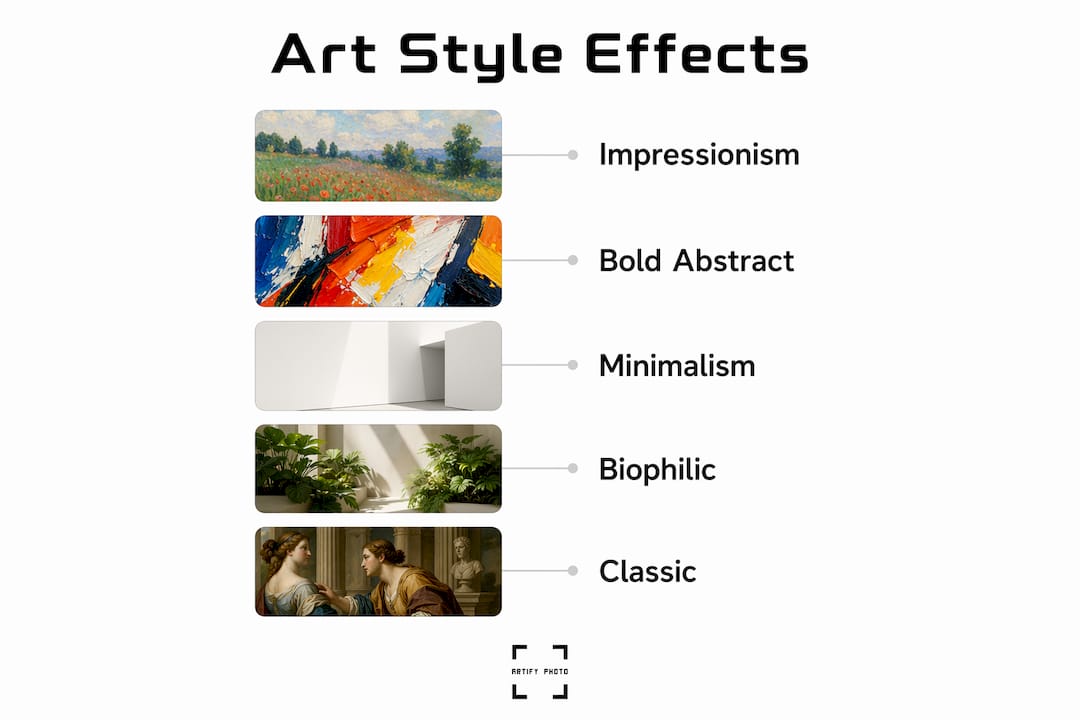
Not every style works in every room, and the science backs that up. A 2025 Frontiers in Psychology study used both the PAD emotional scale and EEG measurements to examine how oil painting styles interact with interior environments. The results show that Impressionism and Romanticism are consistently preferred in modern interiors, while Contemporary art receives a less favorable emotional response in the same settings. The takeaway is clear: art style and interior context jointly drive emotional outcomes, not artwork subject matter alone.
Age and gender also shape these preferences in measurable ways. Younger viewers tend to respond more positively to bold, high-contrast Contemporary works, while older viewers show stronger emotional engagement with Impressionistic and Romantic styles. This is not about taste being fixed. It reflects how accumulated visual experience shapes what feels resonant versus jarring.
Here is a practical comparison to guide your choices:
| Art style | Best room context | Primary emotional effect |
|---|---|---|
| Impressionism | Living room, bedroom | Calm, warmth, nostalgia |
| Romanticism | Study, reading nook | Depth, contemplation, comfort |
| Contemporary | Home office, entryway | Energy, focus, modernity |
| Biophilic / nature-inspired | Any room, especially urban homes | Stress relief, attention restoration |
| Personal photography as art | Bedroom, family spaces | Identity reinforcement, emotional connection |
Pro Tip: Layer your art choices with lighting and wall color. Warm-toned bulbs (2700K to 3000K) amplify the emotional warmth of Impressionistic and Romantic works, while cooler daylight bulbs (5000K) sharpen the visual impact of Contemporary pieces. The frame finish matters too: natural wood suits biophilic art, while black or brushed metal frames reinforce the energy of Contemporary styles.
How is AI changing personalized art experiences at home?
Emotion-sensitive generative systems represent the most significant shift in how art personalization works at scale. A 2026 Springer Nature paper describes systems that integrate multimodal emotion recognition using facial expressions, voice tone, and physiological signals to generate visual art in real time, matched to a viewer’s current emotional state. This is not a future concept. Prototype systems are already producing personalized visual outputs with measurably higher emotional consistency than single-signal approaches.
For the average homeowner, this technology opens up several practical possibilities:
- Mood-responsive digital displays: Smart frames and digital canvases can shift artwork based on biometric or behavioral inputs, making your wall art genuinely responsive to how you feel on a given day.
- AI-assisted style matching: Platforms are beginning to use preference data and room photography to recommend art styles that align with both your aesthetic history and the emotional function of a specific room.
- Custom generative prints: AI tools can now produce one-of-a-kind prints based on personal prompts, color preferences, and emotional keywords, giving you a piece that no one else owns.
- Iterative personalization: Unlike a static purchase, AI-enabled systems learn from your reactions over time, refining recommendations toward greater emotional accuracy.
The limitation worth acknowledging is that multimodal emotion recognition requires continuous data input, which raises real questions about privacy and intrusiveness. The most effective current approach balances interactivity with user control, letting you opt into personalization rather than having it imposed. Artify’s 3D room preview tool reflects this philosophy: technology serves your vision, not the other way around.
How to curate home art that authentically tells your story
Your home is not a showroom. It is a layered autobiography, and every piece of art you add is a paragraph in that text. Environmental psychology research describes this as emotional editing: the ongoing process of selecting, rearranging, and sometimes removing objects and images to keep your space aligned with who you are becoming, not just who you were.
The most meaningful collections are built slowly. Behavioral design research, including BJ Fogg’s Tiny Habits framework, shows that small, intentional environmental cues consistently outperform large, dramatic changes in shaping mood and identity over time. A single photograph printed as gallery-quality wall art and placed where you see it every morning does more psychological work than a wall covered in pieces you bought quickly to fill space.
Practical principles for authentic art curation:
- Start with memory, not aesthetics. Choose one piece tied to a specific experience, person, or place that carries genuine emotional weight. Build outward from there.
- Edit ruthlessly. A wall with three meaningful pieces communicates more clearly than a wall with twelve mediocre ones. Negative space is part of the composition.
- Match art to room function. Calming, nature-inspired work belongs in spaces for rest. Energizing, bold pieces suit workspaces and entryways where you want momentum.
- Revisit and rotate. Your identity evolves. Art that felt right three years ago may no longer reflect where you are. Rotating pieces keeps your space honest.
Pro Tip: Before buying any new piece, live with a printed test image in the intended spot for a week. This practice, borrowed from interior designers, reveals whether the scale, color, and emotional tone actually work in context before you commit. Artify’s sizes and framing guide makes it easy to test proportions before ordering.
Key takeaways
Art in the home is not decorative filler. It is a psychological tool that shapes identity, regulates mood, and builds emotional well-being through daily, cumulative exposure.
| Point | Details |
|---|---|
| Art drives identity reinforcement | The place-identity feedback loop means daily exposure to personal art actively rehearses your self-concept. |
| Style and context both matter | Impressionism and Romanticism outperform Contemporary art emotionally in modern interiors, per EEG and PAD research. |
| Biophilic art delivers measurable results | Nature-inspired art produced 67% depression improvement and 72% anxiety reduction in a 300-person study. |
| AI personalization is here now | Multimodal emotion-recognition systems already generate art matched to real-time emotional states with high consistency. |
| Slow curation beats fast decorating | Intentional, memory-anchored art selection produces stronger identity reinforcement than volume-based decorating. |
Why art personalization is the most underrated design decision you will make
At Artify, we have watched thousands of customers transform their spaces, and the pattern is consistent. The people who end up most satisfied are never the ones who bought the most art. They are the ones who bought the most considered art. A single photograph of a coastline that matters to you, printed large and framed well, does more for how you feel in a room than an entire gallery wall assembled for visual effect.
What surprises most people is how quickly the psychological shift happens. You hang something that genuinely belongs to your story, and within days the room feels different. Not because the walls changed, but because the feedback loop kicked in. You see yourself reflected back, and that reflection is clarifying.
The conventional advice in interior design is to start with a color palette and find art that matches. We think that is exactly backward. Start with the art that moves you, then build the room around it. Color, furniture, and lighting are flexible. The emotional core of a piece is not.
We also believe the create vs. collect question is worth sitting with before you spend anything. Transforming a personal photograph into gallery-quality wall art is not the same as buying a print because it matches your sofa. One is decoration. The other is autobiography.
— Artify
Start building your personalized art collection with Artify
Artify exists to help you turn meaningful images into gallery-quality wall art that genuinely belongs in your home. Whether you are starting from a personal photograph or browsing curated works by independent artists, every piece on the platform is designed to carry emotional weight, not just fill space.
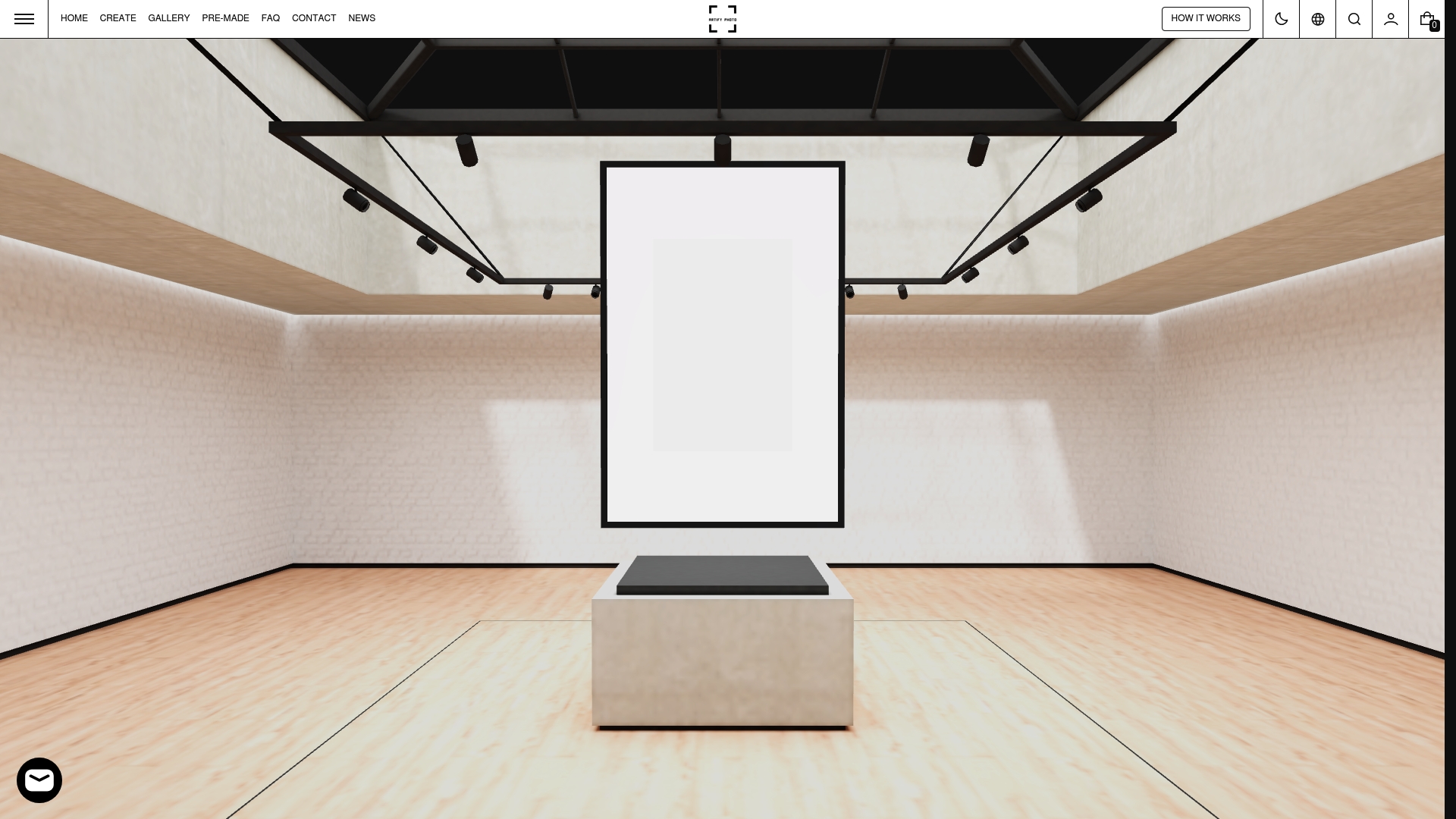
Browse Artify’s pre-made collections to find nature-inspired, landmark, and contemporary works curated for emotional resonance and personalization impact. If you want to go further, upload your own photographs and work with independent artists to create something that exists nowhere else. Artify’s full artwork catalog gives you both options in one place, with 3D room previews and personalized framing to make every decision confident before you commit.
FAQ
What is the role of art in personalization?
Art functions as the primary vehicle for expressing individual identity in a personal space, reinforcing self-concept through daily visual exposure. Research confirms this operates through a place-identity feedback loop where curated art actively shapes emotional experience and psychological well-being over time.
How does art style affect mood in different rooms?
Art style and interior context jointly determine emotional response, per Frontiers in Psychology 2025 research using EEG and PAD emotional measurements. Impressionistic and Romantic styles produce stronger positive emotional responses in modern interiors, while Contemporary art is better suited to high-energy spaces like home offices.
Can biophilic art really improve mental health at home?
Yes. A 2026 BMC Psychology study with 300 urban residents found that long-term exposure to biophilic art environments produced a 67% improvement in depression symptoms and a 72% reduction in anxiety through attention restoration and stress reduction mechanisms.
How does AI improve personalized art experiences?
AI systems using multimodal emotion recognition, combining facial, voice, and physiological signals, generate visual art matched to a viewer’s real-time emotional state with measurably higher accuracy than single-input approaches. Practical applications include mood-responsive digital displays and AI-assisted style matching for specific rooms.
How do I start curating art that reflects my identity?
Begin with one piece tied to a specific memory or value, then build outward slowly. Environmental psychology research supports intentional, emotionally edited curation over volume-based decorating, as meaningful art tied to personal history produces the strongest identity reinforcement over time.