


TL;DR:
- Choosing the right art for a living room depends on appropriate scale and placement. Art should cover 60–75% of furniture width and be centered at eye level, 57–60 inches from the floor. Renters can hang art with adhesive strips or lean large pieces against the wall to avoid damage.
Art for living rooms is defined as curated wall art and decorative pieces selected to enhance a space’s personality, scale, and emotional atmosphere. The right piece does more than fill a blank wall. It anchors the room, reflects who you are, and gives guests something to feel and remember. Whether you own your home or rent it, the choices you make about living room wall art shape how the entire space feels. This guide covers sizing rules, art types, renter-friendly hanging methods, and styling tips that actually work.
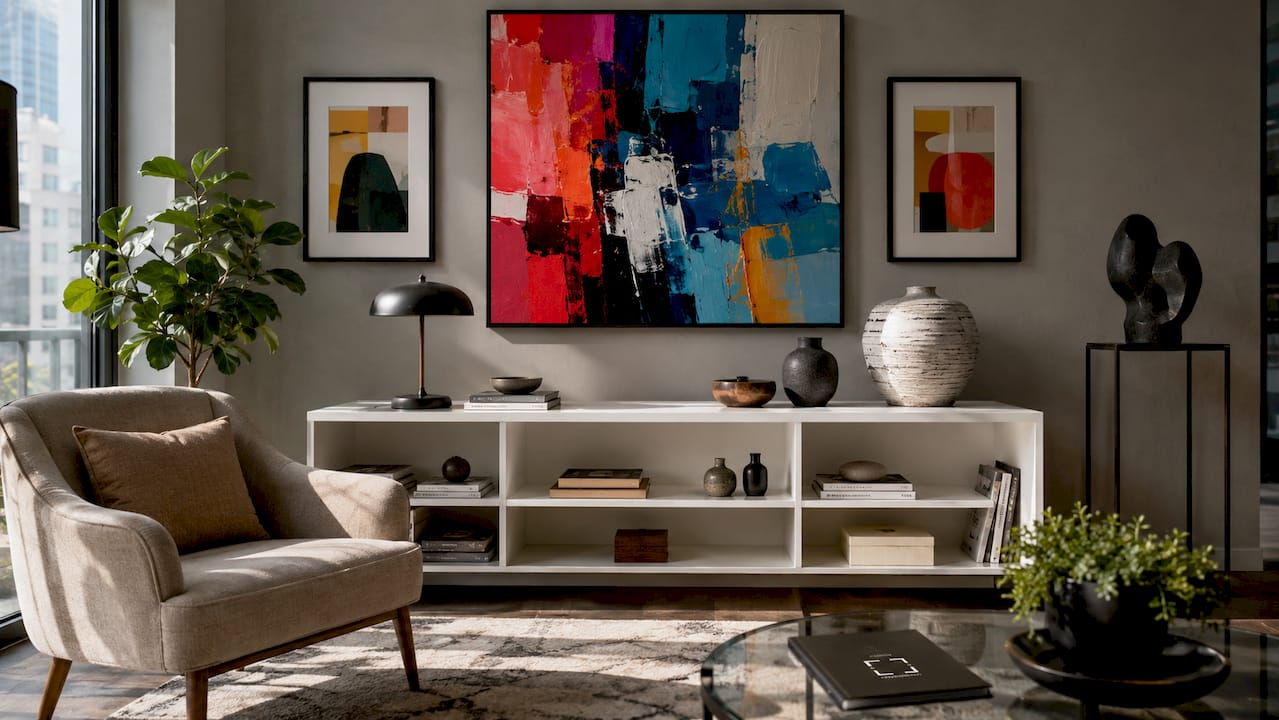
1. How to choose the right art for your living room
The single most important rule in selecting living room wall art is scale. Art that is too small looks lost. Art that is too large overwhelms the room. The 60–75% width rule is the standard: your artwork should span roughly 60–75% of the width of the furniture beneath it. For a standard 84-inch sofa, that means artwork in the 56–63 inch range.
Height matters just as much as width. Center your art at 57–60 inches from the floor. That is average adult eye level whether you are standing or seated. Leave 6–12 inches between the top of your sofa and the bottom edge of the frame.
Most decorating mistakes with living room art come from ignoring spatial relationships with furniture and eye level, not from the art piece itself. Getting the scale right first makes every other decision easier.
| Furniture width | Recommended art width | Center height from floor |
|---|---|---|
| 60 inches (small sofa) | 36–45 inches | 57–60 inches |
| 84 inches (standard sofa) | 56–63 inches | 57–60 inches |
| 96 inches (large sectional) | 58–72 inches | 57–60 inches |
Pro Tip: Before you hang anything, cut paper to your target art dimensions and tape it to the wall. Sit on your sofa and evaluate the position from there. This paper mock-up method prevents the most common vertical misalignment errors.
2. Single large canvas vs. gallery wall: which works better?
The choice between a single large canvas and a gallery wall comes down to the mood you want. A single large piece creates a calm, minimal feel. A gallery wall feels collected, personal, and layered. Neither is wrong. They just tell different stories.
A single large artwork is simpler and lower risk to place than a gallery wall. One piece, one decision, one hanging point. For renters or anyone who wants a clean look, this is the faster path to a finished room.
Gallery walls reward planning. Gallery walls should span roughly 50–65 inches wide for a 7-foot sofa, with consistent frame spacing and a planned footprint. Treat the entire arrangement as one visual unit and apply the sofa width rule to the full grouping, not to each individual frame. Artify’s gallery wall ideas guide walks through exactly how to plan that footprint before you put a single nail in the wall.
3. Top art types that work in living rooms
Different art types create different moods. Knowing which type fits your space saves you from expensive mistakes.
- Single large canvas or painting. A statement piece above the sofa is the most classic approach. It anchors the room and gives guests a clear focal point. Living room walls are prime visual spaces for making a style statement, particularly above focal points like mantels and sofas.
- Gallery wall with mixed frames. Combining photo prints, illustrations, and collectibles creates personal storytelling on your wall. Use frames of varied sizes for a natural composition. Large, darker frames belong centrally with lighter, smaller frames toward the edges for visual balance. Uniform sizes risk looking like wallpaper.
- Abstract and contemporary art. Bold shapes and colors create visual energy. Abstract pieces work especially well in modern and minimalist rooms where the art carries the room’s personality. Artify’s abstract expressionism prints show how a single piece can define an entire wall.
- Photography and nature prints. Landscape photography, botanical prints, and nature-based imagery bring calm into a space. These work well in rooms that already have strong color or pattern elsewhere.
- Textile and mixed-media art. Woven wall hangings, macramé, and mixed-media pieces add texture and dimension that flat prints cannot. They work particularly well in rooms that feel visually flat or overly minimal.
For a broader look at what styles are trending right now, Artify’s wall art trends for 2026 covers the styles gaining the most traction in living spaces.
4. How renters can hang art without damaging walls
Renters face a real constraint: bold art choices can cost you your security deposit. The solution is matching your hanging method to the weight of the artwork and the type of wall you have.
Adhesive strips are the go-to option for lightweight canvases and prints. They work well when you respect the weight limits. Adhesive strip failure usually comes from exceeding total weight limits and not accounting for the texture of drywall, not from weak adhesive. Always weigh the frame, glazing, and hardware together before choosing your strip rating.
For heavier pieces, Monkey Hooks are a strong option. They can safely hold up to 50 pounds with minimal wall damage. Picture rails and ledge shelving are ideal for renters who want to change their art frequently without adding new holes each time.
Leaning large pieces against the wall is the most damage-free approach of all. A large canvas leaned against a console table or fireplace wall looks intentional and styled, not lazy. It also lets you swap pieces easily as your taste changes.
Pro Tip: Always check your lease agreement before hanging anything. Some leases restrict even adhesive strips. Knowing your limits upfront lets you plan your art display without surprises at move-out.
5. Practical tips for styling living room art
Good placement turns decent art into a great room. These principles apply whether you have one piece or ten.
Anchor around architectural features. A fireplace, a large window, or a built-in bookcase gives you a natural starting point. Designers layer art and decorative accents around architectural focal points to create conversation-starting features. Work with what the room already has.
Never hang art too high. The most common mistake is hanging artwork above 65 inches from the floor, which shifts focus away from the furniture and breaks room harmony. Keep the center at 57–60 inches. When in doubt, go lower rather than higher.
Align gallery walls with furniture, not the wall. The visual center of a gallery wall should align with the center of the sofa beneath it, not the center of the wall. This creates a grounded, intentional look. Treating gallery walls as a single visual unit and applying the width ratio to the full arrangement is the key to getting this right.
Use color or theme to unify diverse pieces. A gallery wall with five different styles can still look cohesive if every piece shares a color palette or subject matter. Black and white photography, for example, unifies instantly regardless of subject.
| Styling goal | Best approach |
|---|---|
| Calm, minimal feel | Single large canvas, centered above sofa |
| Personal storytelling | Gallery wall with mixed frames and photo prints |
| Bold visual impact | Abstract or contemporary art with strong color |
| Texture and warmth | Textile or mixed-media wall hanging |
| Serene, natural mood | Photography or botanical nature prints |
For room-specific guidance beyond the living room, Artify’s room-by-room art guide covers how art choices shift from space to space.
Key takeaways
The most effective living room art combines correct scale, intentional placement, and pieces that reflect your personal style rather than just filling space.
| Point | Details |
|---|---|
| Scale before style | Art should span 60–75% of the furniture width beneath it for visual balance. |
| Eye-level placement | Center artwork at 57–60 inches from the floor to match seated and standing eye level. |
| Single piece vs. gallery wall | Choose a single canvas for calm and simplicity; choose a gallery wall for personal storytelling. |
| Renter-friendly hanging | Use adhesive strips within weight limits, Monkey Hooks for heavier pieces, or lean large frames. |
| Unify with color or theme | A shared color palette or subject matter makes diverse pieces look cohesive on any wall. |
Artify’s take on art that actually means something
The advice I see repeated most often about living room art focuses on rules: the right width, the right height, the right frame color. Those rules matter. But they are the floor, not the ceiling.
The rooms that stay with you are the ones where the art feels chosen, not placed. A photograph of a place you love, a print by an artist whose work stopped you cold, a piece that connects to a memory. That kind of art does something no perfectly scaled canvas can do on its own. It makes the room feel like it belongs to someone specific.
The challenge for renters is real. You cannot always commit to the wall the way a homeowner can. But leaning a large piece, using a picture ledge, or building a gallery wall with adhesive strips gives you more options than most renters realize. The constraint is smaller than it feels.
Trends shift. The abstract style that feels current in 2026 will look dated by 2031. The photograph of your grandmother’s kitchen will not. My honest recommendation: anchor your room with one piece that means something to you, then build around it with pieces that complement the scale and palette. That combination outlasts every trend cycle.
— Artify
Ready to find art that fits your living room
Artify makes it straightforward to find living room wall art that fits your space and your story. Whether you want a ready-to-hang piece from a curated collection or something built around your own photographs and memories, the options are there.
Browse Artify’s pre-made collections for art that is ready to order in the size and frame style your room needs. If you want something more personal, Artify’s custom art creation lets you turn your own photos into gallery-quality prints. You can also explore framing options to complete the presentation before anything ships. Every piece is printed on demand and created by independent artists.
FAQ
What size art should I hang above a sofa?
Art above a sofa should span 60–75% of the sofa’s width, centered at 57–60 inches from the floor with 6–12 inches between the sofa top and the frame’s bottom edge.
Can renters hang heavy art without damaging walls?
Yes. Monkey Hooks hold up to 50 pounds with minimal wall damage, and picture ledges let you display heavier pieces without any new holes. Always check your lease before hanging.
What is the difference between a gallery wall and a single large piece?
A single large canvas creates a calm, minimal look and is easier to place. A gallery wall feels more personal and collected but requires more planning to avoid a cluttered result.
How do I make a gallery wall look cohesive?
Treat the entire arrangement as one visual unit, apply the sofa width rule to the full footprint, and use a shared color palette or theme across all pieces. Vary frame sizes rather than using uniform sizes throughout.
What type of art works best in a modern living room?
Abstract and contemporary art suits modern living rooms best. Bold shapes and strong colors carry visual weight in minimal spaces where the art is meant to be the room’s defining feature.